The task for this one was to find a timely article and create a three-panel art piece that represents the core concepts of the article, using some quotes, and with the inclusion of a logo that all three panels would share.
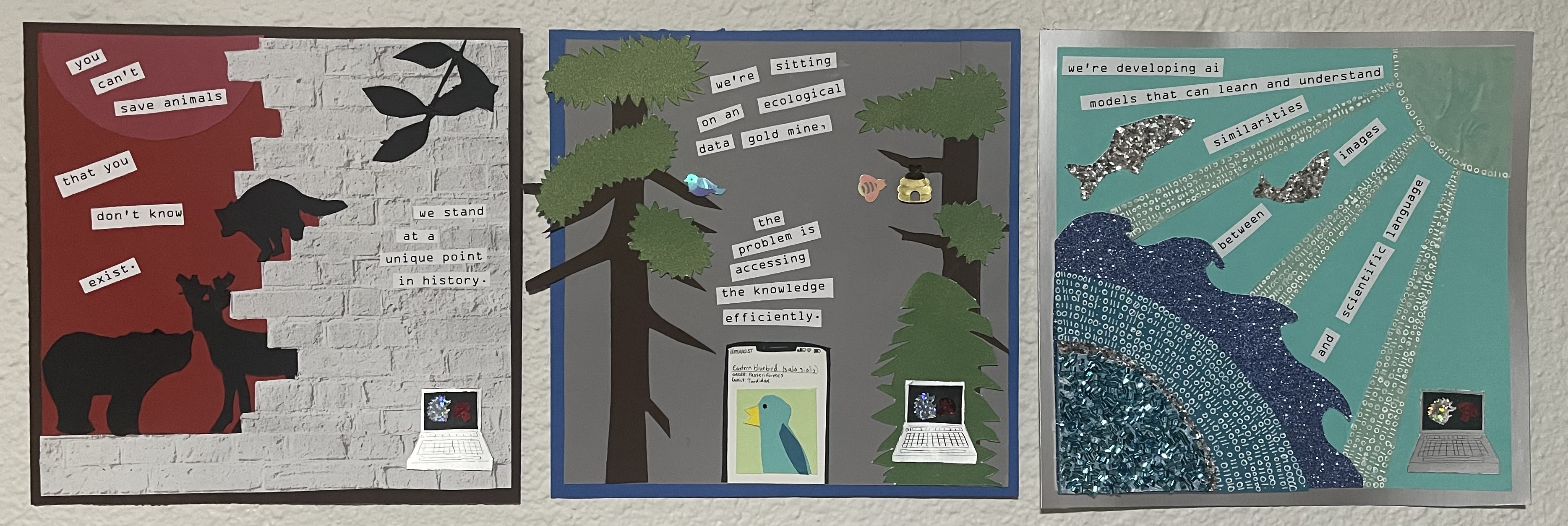 This piece is based on a TED Radio Hour segment about the use of technology in gathering data about wildlife that can be used to better understand the natural world (it's the first story in the podcast). It was an interesting article for me because I'm very anti-AI, but the scientist interviewed talked about how when used responsibly like any other tool, AI can actually be extremely helpful in organizing data and finding patterns in ecological studies, so it helped me gain some new perspectives on the idea of AI being used for good. To be clear, it's not talking about things like ChatGPT, but more scientific models that use much less energy and are designed specifically to help scientists sort through the massive amounts of data we're able to collect on nature through citizen science apps like iNaturalist. It's a fascinating topic to me.
As far as the piece itself, I decided to go with a paper-cutout look. I definitely don't feel like it's my best work. I kept running into issues and roadblocks as I put it together, and as time kept marching on and my other classes' finals took up a lot of my time and left me a little overly stressed, I found myself having to scale back what I wanted to do just to be able to get it all done. One of my main issues is that while it was a great article, I realized a little too late that there weren't a lot of short, succinct quotes I could use to really drive the message home. I ended up having to break up longer sentences and stitch the ideas together to make them short enough to fit on each page, while still retaining the original message as best I could. I really hope the main idea of the article shows through, because I have my doubts. It feels a little jumbled to me. I also had some issues with my razor blade not being sharp enough, which made it pretty hard to cut the paper. All in all, though, I like it and I'm glad I was able to finish it in time even if it's not exactly how I originally pictured it.
For the first panel, the idea was to have shapes of animals in an urban setting, reflecting on the concept of their needs being "invisible" against a backdrop of modern human life, represented by the brick wall. For the second panel, I wanted it to convey the idea talked about in the episode (how a citizen scientist can take a photo of a bird in a tree and have it provide lots of information on how it lives and what it needs). The third panel is meant to be a mashup of data and nature, represented by the shinyness of water and fishscales reflecting the shiny metallic aesthetic of technology. Fun fact: the binary used in the last panel is actually part of the paragraph that talks about salmon, ran through a binary translator.


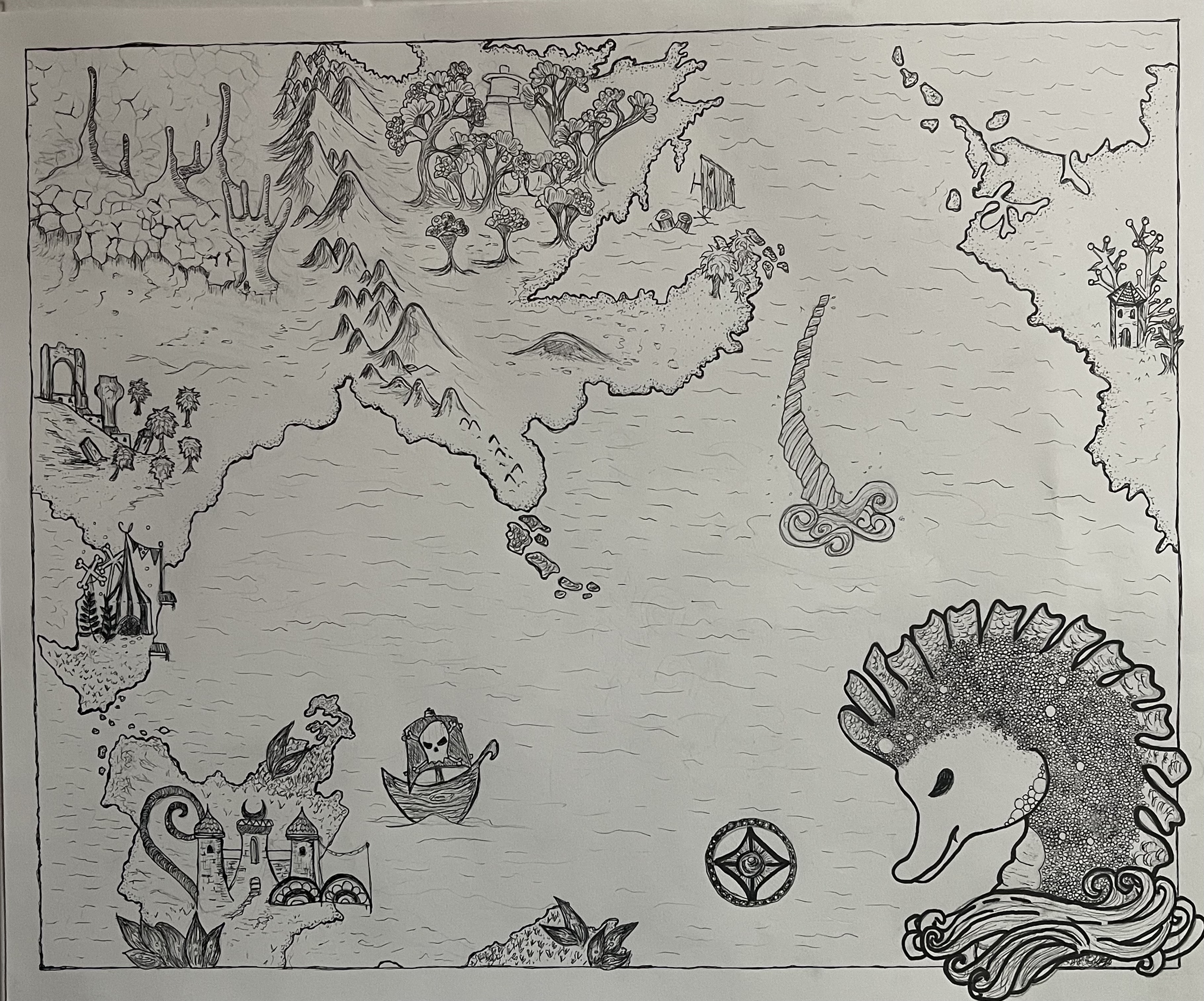
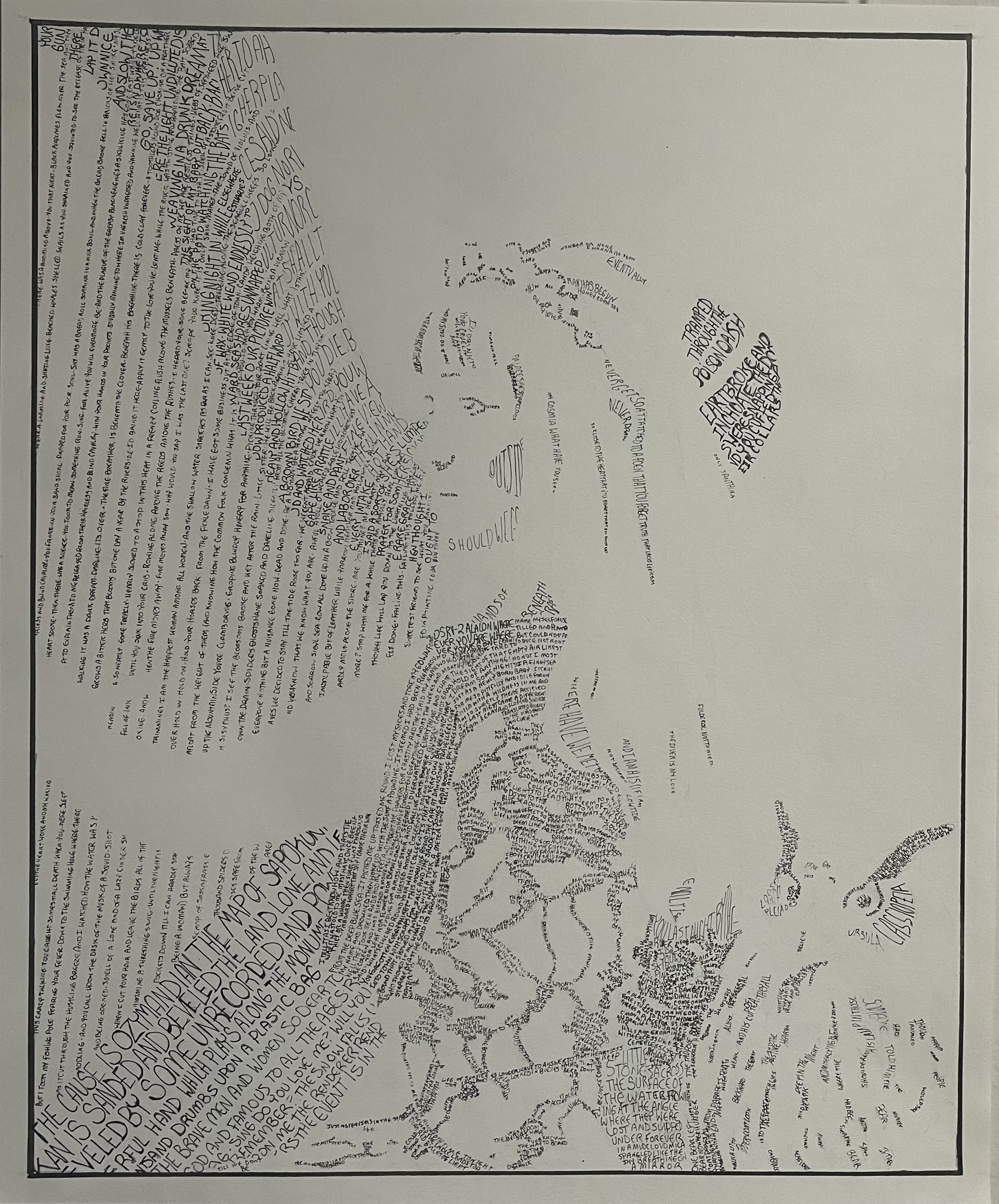 My subject was Joanna Newsom, and the words used to create the piece come from her song lyrics. Seeing as her music is so deeply tied to my soul, and her words are so profound and intricate that I often find myself wanting to write them down just for fun, I instantly knew there could be no better choice for me for this project. I found a great photo of her and went to work tracing it and laying out where all the shading would be. Writing in the lyrics was incredibly relaxing and I very much enjoyed making this piece. I think out of all of them, this is the one I'm most proud of.



